
KNOWLEDGE
Knowledge
Producer goods
[Reducing Cracking and Chipping in Stamping Molds] Key Points in Selecting Cold Work Tool Steel That Cannot Be Judged by Hardness Alone
2026-08-06
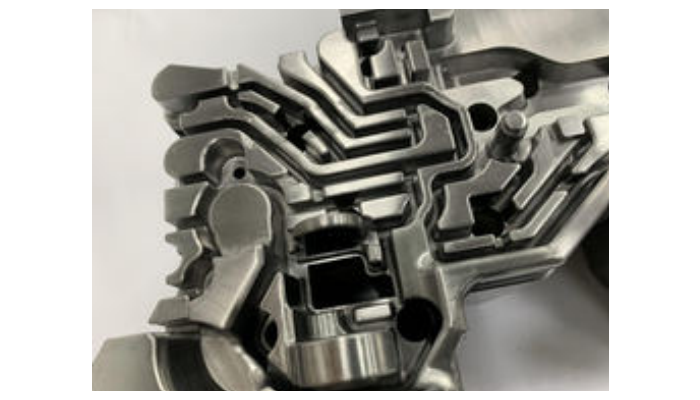
When cracking or chipping occurs in stamping molds, we often think "hardness may not be sufficient." However, as hardness increases, wear resistance and deformation resistance improve, but on the other hand, the material tends to become brittle more easily.
To reduce cracking and chipping, checking is not just about HRC values; it is essential to inspect toughness, dimensional changes after heat treatment, machined surface conditions, the impact of electrical discharge machining (EDM), and surface treatment as well.
Table of Contents
- Narrowing Down Causes Based on the Occurrence of Cracking and Chipping
- 3 Characteristics to Compare Besides Hardness
- Comparison Testing and Application Track Record of YSTG11
- What YAMAICHI SPECIAL STEEL (THAILAND) Can Support
- Frequently Asked Questions
■ Narrowing Down Causes Based on the Occurrence of Cracking and Chipping
Mold damage has different items to check depending on the location and shape where it occurs.
| Main Items to Check |
Repeated small chips occur at the cutting edges or corners | Toughness, hardness, and localized stress concentration |
The die suddenly develops a major fracture | Die geometry, corners, machining marks, and heat-treatment condition |
Cracks originate from EDM-processed areas | EDM parameters, recast layer, and surface-finishing condition |
Extensive corrective machining is required after heat treatment | Dimensional changes, die geometry, and hardening and tempering conditions |
Chipping is a phenomenon where microcracks formed on the mold surface expand, causing parts of the cutting edge or corners to break off. On the other hand, large cracks may originate from sharp corners, machining marks, grinding marks, or the surface layer after electrical discharge machining (EDM).
Particularly in the EDM process, a re-melted layer or microcracks may occur on the surface. It has been reported that longer pulse durations tend to result in deeper heat-affected zones and an increased likelihood of cracks in the re-melted layer. Therefore, it is necessary to check not only the material itself, but also EDM conditions and the final finishing process.
■ 3 Characteristics to Compare Besides Hardness
1. Toughness and Impact Resistance Value
Even with the same hardness, resistance to the occurrence and propagation of cracks varies depending on the steel grade.
In cases where cracking and chipping are issues, it is essential to inspect the impact resistance value, toughness, and microstructure alongside the target hardness. Simply reducing hardness will decrease wear resistance and deformation resistance; therefore, selecting a material that maintains structural toughness while preserving the necessary hardness is crucial.
2. Dimensional Stability After Heat Treatment
If changing materials results in larger expansion or contraction after heat treatment, the man-hours required for correction and re-measurement will increase.
Current materials and candidate materials must be compared under conditions close to actual molds, aligning the quenching temperature, tempering temperature, cooling method, and measurement positions.
3. Compatibility with Machining and Surface Treatment
Even if material costs decrease, if tool wear or processing time increases, it may not lead to overall cost reduction in mold manufacturing.
In addition to machinability, processed surface quality, and tool wear, film adhesion must also be checked when applying PVD coating. Since machining marks and post-EDM surface layers can become starting points for cracks, it is important not to evaluate material, machining, and surface treatment separately.
■ Comparison Testing and Application Track Record of YSTG11
YSTG11, supplied in Thailand by YAMAICHI SPECIAL STEEL (THAILAND) CO., LTD., is a cold work tool steel equivalent to SKD11 that has obtained JIS certification.
In internal comparison tests with Company A's SKD11, we verified not only hardness, but also impact value, dimensional changes after heat treatment, machinability, tool wear, and PVD coating adhesion.
Comparison Item | YSTG11 | Company A’s SKD11 |
Hardness | 58.6 HRC | 58.3 HRC |
Impact Value | 13.2 J/cm² | 13.9 J/cm² |
Dimensional Change Rate after Tempering at 505°C | 0.07% | 0.10% |
Regarding machinability, post-processing appearance, and tool wear, performance was confirmed to be problem-free compared to Company A's SKD11. In post-PVD coating tests, no film peeling was observed around Rockwell indentations.
Track Record in Molds for Ultra-High-Strength Steel Sheets
YSTG11 has been adopted in a 3,000-ton transfer mold used to produce automotive body structural components.
- Processed Material: Ultra-high-strength steel sheet SGCA1180
- Sheet Thickness: 1.6 mm
- Application Process: All processes, including blanking, drawing, trimming, and bending
- Conventional Material: Company A's SKD11
- Evaluation: Equivalent to Company A's SKD11 in terms of processability, post-quenching hardness, and post-quenching distortion
In addition, it has been adopted in automatic progressive molds for automotive seat parts, precision part molds, and tandem molds related to the ceramics industry, with a total sales record of 105 tons as stated in the explanatory documentation.
※ Comparison figures are based on internal test results. Actual performance may vary depending on mold geometry, processing conditions, heat treatment conditions, and operating environment.
■ What YAMAICHI SPECIAL STEEL (THAILAND) Can Support
The causes of cracking and chipping are not limited to steel materials alone. They may result from a combination of factors, including hardness, mold geometry, heat treatment, processed surfaces, EDM, and surface treatment.
YAMAICHI SPECIAL STEEL (THAILAND) CO., LTD. does not only sell materials, but can also comprehensively evaluate the following scope based on actual damage conditions and manufacturing parameters:
Proposing Cold Work Tool Steels Comparable to Currently Used Materials
We review the currently used steel grade, required hardness, processed material, and damage characteristics to propose candidate materials from cold work tool steels, including YSTG11.
Rather than simple standard comparison alone, we consider points such as:
- Balance between wear resistance and toughness
- Dimensional stability after heat treatment
- Machinability and tool wear
- Compatibility with PVD coating
- Cost reduction effects while maintaining quality
Comprehensive One-Stop Support from Raw Materials and Machining to Heat Treatment
In addition to material supply, we support cutting to specified dimensions, precision machining, vacuum heat treatment, surface treatment, and delivery within Thailand.
Instead of changing only the raw material, we evaluate heat treatment and processing conditions together, reducing the burden of coordinating separately with multiple external subcontractors while proceeding with comparisons against conventional materials.
You can consult us from both material and process perspectives for issues such as "hardness is within standard specs but chipping won't stop" or "wanting to cut costs by switching from Japanese steel, but concerned about heat treatment deformation and machinability."
■ Frequently Asked Questions
Q1. Can reducing hardness prevent cracking?
A1: While reducing hardness may make cracking less likely to occur in some cases, wear resistance and deformation resistance may decrease. Rather than simply lowering hardness, it is important to consider material grades and heat treatment conditions that maintain toughness while preserving the required hardness.
Q2. Can YSTG11 be used in molds for ultra-high-strength steel sheets?
A2: It has a proven track record in a 3,000-ton transfer mold processing SGCA1180 with a sheet thickness of 1.6 mm. It is used across all processes—blanking, drawing, trimming, and bending—and was evaluated as equivalent to Company A's SKD11.
Q3. Can we consult on materials, heat treatment, and surface treatment together?
A3: In addition to material supply, you can consult with us in a centralized manner for cutting, precision machining, vacuum heat treatment, and surface treatment. We will organize the necessary inspection items based on your current damage conditions and manufacturing parameters.
※ If you would like further details, please contact us via the inquiry form at the bottom of the page.
Company Information
Strip Steel / Wire Steel / Bar Steel
Yamaichi Special Steel (Thailand) Co., Ltd. is committed to continuously expanding its product range while strengthening strategic partnerships with leading manufacturers from Japan and China. We supp ...
CONTACT
Contact