_1276f2af-bafd-441a-a1dd-e6cadf2019a2.png)
KNOWLEDGE
Knowledge
Technology and Services
【Sludge Treatment in Painting Booths】The Structure in Which Unwelcome Cleaning Work and Wastewater Treatment Costs Overlap
2026-07-22
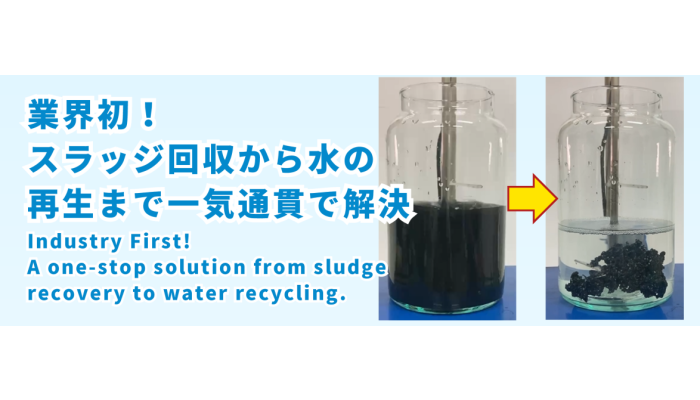
In painting booths, paint sludge and dirt are generated through daily painting processes. Their treatment involves multiple tasks, including not only cleaning inside the booth but also collecting and dewatering sludge, treating contaminated water, and managing waste.
Therefore, when considering the burden of sludge treatment, it is necessary to look beyond only one aspect, such as “cleaning is difficult,” and include the wastewater and waste treatment that occur afterward.
This article explains why the burden associated with sludge treatment in painting booths overlaps, the problems caused by leaving sludge untreated, and “booth water recycling,” which considers the entire process from sludge collection to water reuse as one integrated system.
Table of Contents
- Why the Burden Overlaps in Painting Booth Sludge Treatment
- Why Leaving Sludge Untreated Increases the Management Burden
- The Concept of Booth Water Recycling
- Site Conditions to Check in Preparation for Introduction
- FAQ
- Terms to Know
■ Why the Burden Overlaps in Painting Booth Sludge Treatment
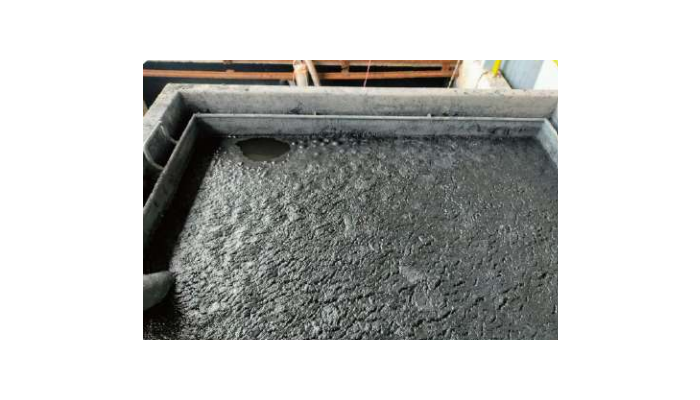
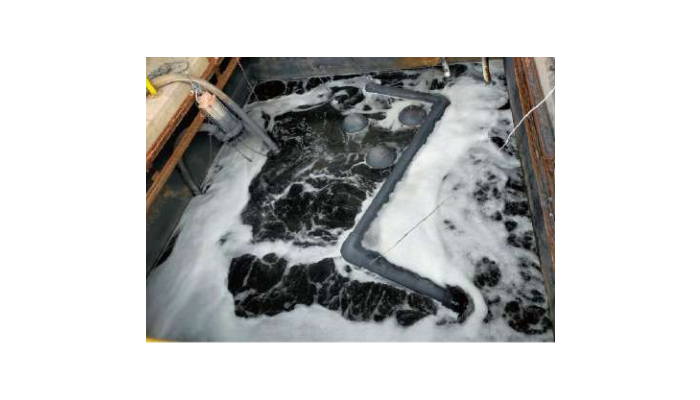
In painting booths, paint mist and dirt generated during painting accumulate in the booth water and inside the equipment, eventually becoming sludge that must be collected and treated.
Such cleaning and sludge collection are among the tasks that workers tend to avoid because the work is very dirty and time-consuming. In addition, there are cases where fewer external contractors are available because
companies that previously handled cleaning have gone out of business.
The burden also does not end with the cleaning work. Costs are incurred for dewatering the collected sludge, waste treatment, and the treatment of contaminated booth water and cleaning wastewater. Every time cleaning is carried out, an additional burden arises that includes the subsequent wastewater treatment and waste management.
Therefore, the issue is not simply that “cleaning is difficult.” It is a combination of questions such as who will perform the work, whether the work can be handled continuously, and how treatment costs can be reduced. In addition, when the line must be stopped for cleaning, the impact on production must also be considered.
■ Why Leaving Sludge Untreated Increases the Management Burden
When sludge is left inside the booth for a long period, it may accumulate inside the equipment or become heavily mixed into the booth water, making collection and water management more difficult.
Therefore, the amount of sludge is not the only point that should be checked. It is also necessary to look at where the sludge has accumulated, whether it is in a condition that allows easy collection, whether it can be dewatered, and how it is managed.
Understanding the condition of the sludge and reviewing the collection and treatment methods is important not only for reducing the burden during cleaning but also when considering the subsequent wastewater treatment and waste treatment.
■ The Concept of Booth Water Recycling
Booth water recycling is a system that considers sludge collection and water regeneration as one integrated process.
Specifically, it treats thorough sludge collection and dewatering, booth cleaning by a specialist contractor, and reuse of the treated water as one continuous flow. Rather than considering cleaning, sludge treatment, and wastewater treatment separately, it is an approach that also reviews how the water and waste generated afterward should be handled.
Instead of replacing and disposing of all the water, reusing it depending on its condition can also help reduce the burden associated with wastewater treatment and water replacement.
TS COATING is currently preparing for the introduction of a booth water recycling system. The service is scheduled to begin in Thailand in December 2026 and in Japan in April 2027.
■ Site Conditions to Check in Preparation for Introduction
In preparation for introducing a booth water recycling system, it is important to organize information on the current cleaning method and how sludge and wastewater are currently treated.
The main items to check are as follows.
- Amount of booth water and how it becomes contaminated
- Amount of sludge and where it accumulates
- Current sludge collection method
- Ease of sludge collection and dewatering
- Frequency of booth cleaning
- Frequency of booth water replacement
- Wastewater treatment method after cleaning
- Waste generated in subsequent processes
By organizing this information, it becomes easier to understand where the current burden is concentrated and which parts of cleaning, sludge treatment, and wastewater treatment need to be reviewed.
※For details and future service developments, please download the materials or contact us using the form below.
■ FAQ
Q1: Why does cleaning a painting booth tend to place a burden on the worksite?
A1: This is because the work is very dirty and time-consuming, and after the sludge is collected, dewatering, waste treatment, and wastewater treatment must also be carried out. In addition, in Japan, there are cases where fewer contractors are available to handle cleaning work externally.
Q2: What kind of system is booth water recycling?
A2: It is a system that considers sludge collection and dewatering, booth cleaning, and water reuse as one integrated process. It reviews the overall burden, including not only cleaning but also the wastewater and waste generated afterward.
Q3: Can the booth water recycling system already be introduced?
A3: It is currently in the preparation stage for introduction. The service is scheduled to begin in Thailand in December 2026 and in Japan in April 2027.
■ Terms to Know
- Paint Sludge
A material requiring treatment that originates from paint generated during the painting process and accumulates in booth water or inside the equipment. - Booth Water Recycling
A system that considers sludge collection and dewatering, booth cleaning, and water reuse as one integrated process.
※For details and future service developments, please download the materials or contact us using the form below.
Company Information
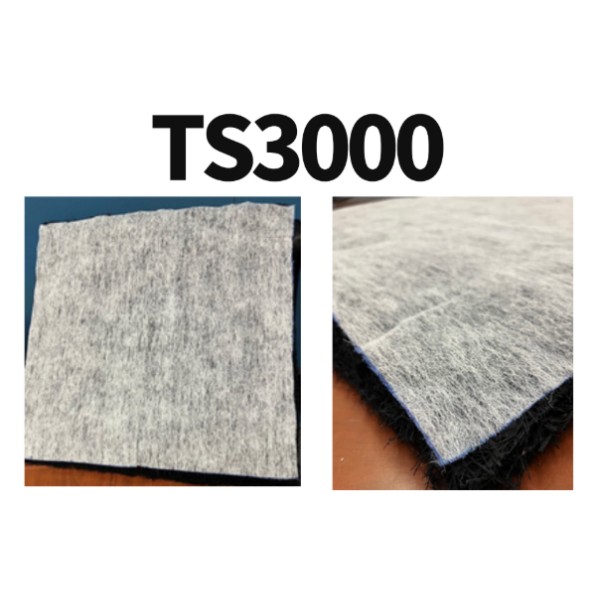
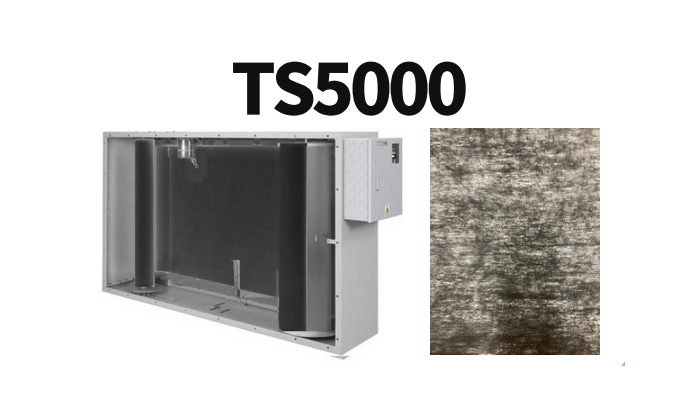
Painting System Installation / Odor & Spray Mist Treatment / Painting Sludge Chemical Treatment
TS COATING (THAILAND) CO., LTD. was established in 2004 in Bangkok, Thailand. We are a specialist company in industrial painting systems and environmental solutions. Our parent company, TS COATING TEC ...
CATALOG
Related Catalogs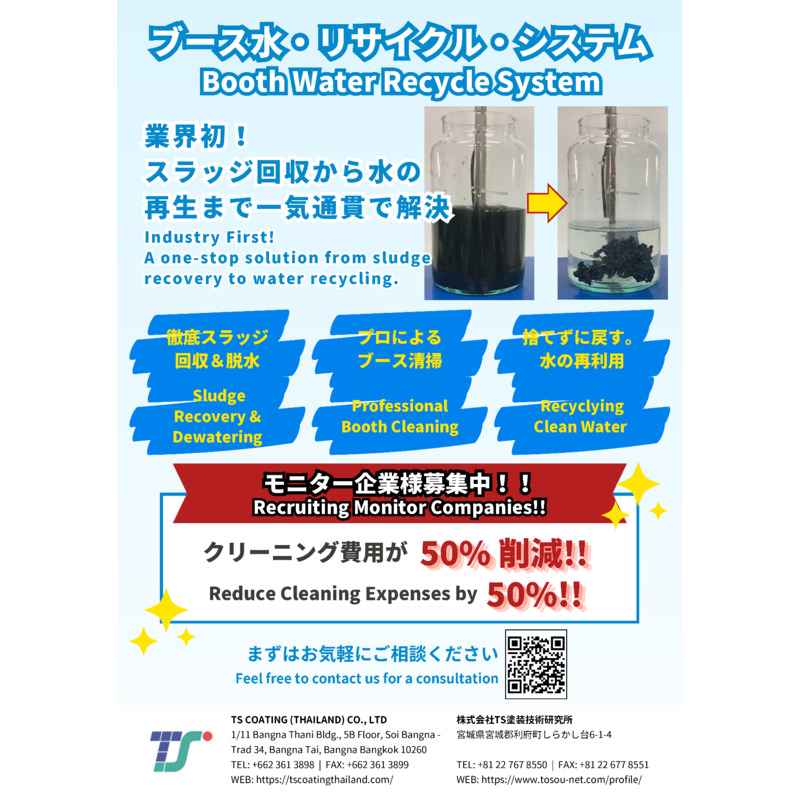
CONTACT
Contact