_1276f2af-bafd-441a-a1dd-e6cadf2019a2.png)
KNOWLEDGE
Knowledge
Technology and Services
【Odor Complaints at Painting Factories】Why Odors Persist at Sites Facing Ongoing Complaints from Nearby Communities
2026-07-22
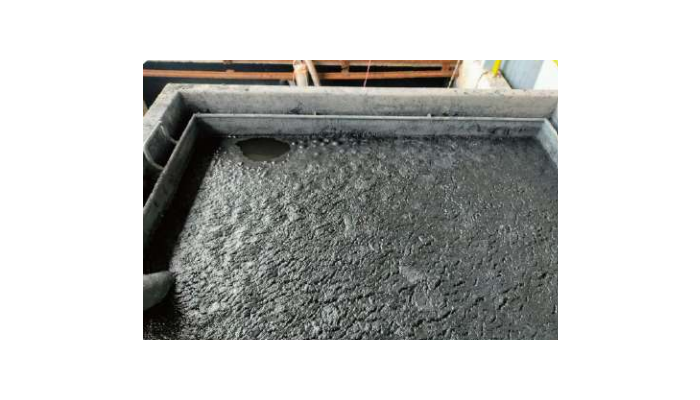
Odors at painting factories do not necessarily originate from only one location. In addition to exhaust duct outlets, water inside the painting booth, paint sludge, and deposits on equipment may also be related to the odor.
Therefore, even if part of the exhaust system is improved, the problem may recur if odor sources remain inside the booth.
This article explains the points to check when odor complaints continue at a painting factory, measures for booth water and paint sludge, and examples of changes in COD values before and after treatment with TS1502C.
Table of Contents
- Why Measures at the Exhaust Outlet Alone May Not Stop the Odor
- Points to Check Inside the Booth When Odors Remain
- Approach to Odor and Sludge Measures Using TS1502C
- COD Values Before and After Treatment with TS1502C
- FAQ
- Terms to Know
■ Why Measures at the Exhaust Outlet Alone May Not Stop the Odor
When complaints about odors are received from nearby communities, attention tends to focus first on places where odors leave the factory, such as exhaust outlets and chimneys.
However, in the painting process, paint mixed into the booth water, sludge, and deposits inside the equipment may be related to the odor. If these sources remain inside the booth, the odor may be carried outside again even if only the exhaust side is improved.
Therefore, odor measures require separate consideration of “where the odor is released outside” and “where the odor is generated.”
■ Points to Check Inside the Booth When Odors Remain
The first points to check are the condition of the booth water and paint sludge.
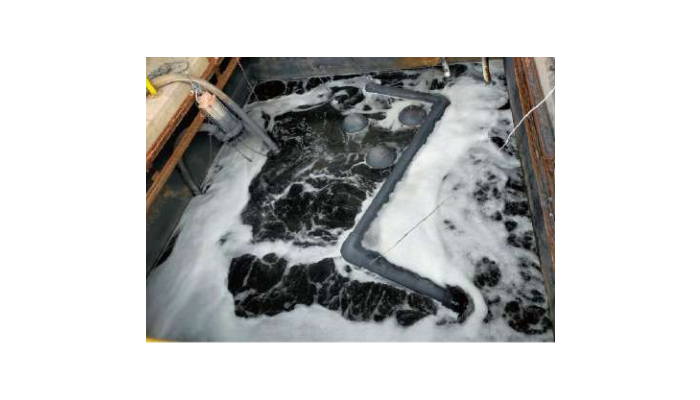
Check whether a large amount of paint is mixed into the booth water, whether dirt is floating on the surface, and whether sludge has remained for a long period. The required response also differs depending on whether the sludge is dispersed in the water, floating to the surface, or accumulated inside the equipment.
At the same time, checking where the odor is strongest inside the booth, such as around the water tank, along the circulating water route, and in areas where paint tends to adhere, makes it easier to narrow down the source.
■ Approach to Odor and Sludge Measures Using TS1502C
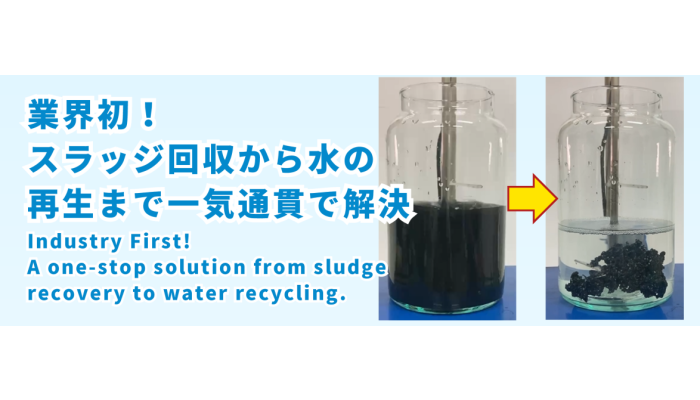
“TS1502C,” provided by TS COATING, is a coagulant developed for the purpose of reducing odors in painting booths. It acts on paint components and sludge in the booth water and can be used for sludge coagulation, reduction of COD in the booth water, and recovery of floating sludge when used together with a coagulation polymer.
Its feature is that it can directly address the condition of booth water and sludge, which may be sources of odor, rather than addressing only the exhaust side.
Usage conditions vary depending on the booth water volume, paint type, sludge condition, and current treatment method. Please contact us individually regarding testing methods and suitable conditions for your painting booth.
■ COD Values Before and After Treatment with TS1502C
When comparing the condition of booth water, COD values can serve as one point of reference in addition to the perceived odor. The following are examples of changes in COD values in booth water before and after treatment using “TS1502C.”
| Water Before Treatment | Water After Treatment |
Company A ① | 4,520 mg/L | 3,040 mg/L |
Company A ② | 2,320 mg/L | 320 mg/L |
Company B | 36,480 mg/L | 21,360 mg/L |
In all three examples, the COD value decreased after treatment.
However, the cause or intensity of an odor cannot be determined from the COD value alone. It is necessary to evaluate it together with the odor at the site, taking into account factors such as the booth water volume, paint type, and sludge condition.
■ FAQ
Q1: When odor complaints are received from nearby communities, where should the inspection begin?
A1: Check not only the places where the odor is released outside, such as exhaust outlets and chimneys, but also the water inside the painting booth, paint sludge, and deposits on the equipment. It is important to consider the odor outlet and the odor source separately.
Q2: Why is it necessary to inspect the water inside the painting booth?
A2: Paint components and sludge become mixed into the booth water, and their condition may be related to the odor. Checking the condition of the water and sludge helps determine whether there is an odor source inside the booth.
Q3: What can be determined from the COD value?
A3: The COD value is one indicator used to examine the condition of the booth water and changes before and after treatment. However, the cause or intensity of the odor cannot be determined from the COD value alone, so it should be checked together with the actual odor and sludge condition.
■ Terms to Know
- Painting Booth
Equipment used for painting work. Depending on the type, water is circulated to capture paint mist. - Paint Sludge
Paint components and solid matter generated during the painting process and collected in booth water or similar systems. - COD
One of the water quality indicators used to understand the degree of contamination caused by organic matter and other substances in water. - Coagulant
A chemical agent used to collect particles dispersed in water and make them easier to separate.
※For more details, please download the materials or contact us using the form below.
Company Information
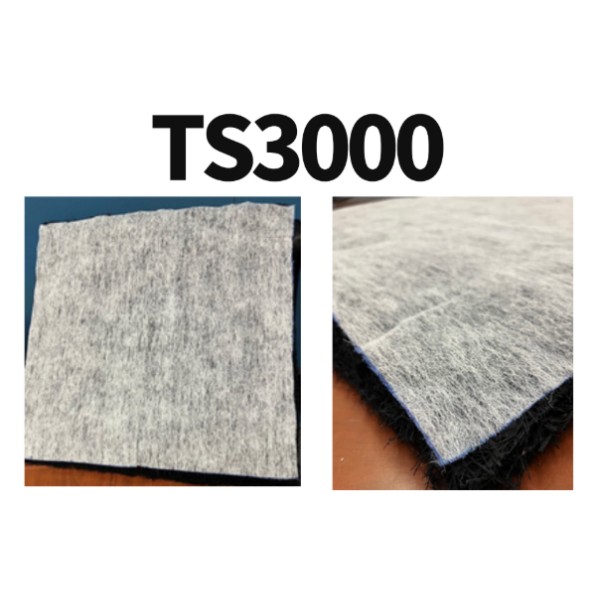
Painting System Installation / Odor & Spray Mist Treatment / Painting Sludge Chemical Treatment
TS COATING (THAILAND) CO., LTD. was established in 2004 in Bangkok, Thailand. We are a specialist company in industrial painting systems and environmental solutions. Our parent company, TS COATING TEC ...
CATALOG
Related Catalogs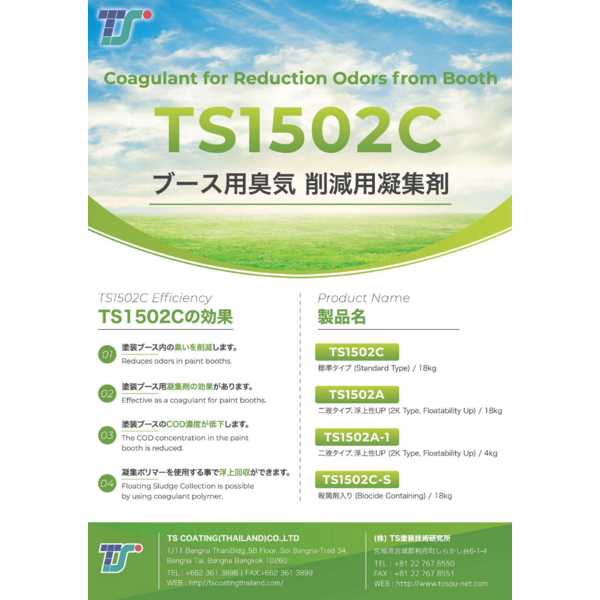
CONTACT
Contact